25 May 2016

Troy (Truva)

It's a thrill to visit ancient Troy, easily done in a day from Çanakkale, Bozcaadaor Assos, or overnight fromIstanbul, by car or tour.

Troy is impressive for its great age (the oldest ruins date from 3000 BC) and beautiful situation. The hokeywooden horse is just for fun (especially for kids).

A movie, with Brad Pitt and Diane Kruger, was released in May 2004. More...

Discovery of Troy
For most of the last 3000 years, people assumed thatHomer's Iliad was fiction, and that Troy (Truva in Turkish) never existed.

Then in 1863 a British expatriate named Frank Calvertdiscovered ancient ruins at a place in western Turkey called Hisarlık (maps), and was convinced they were Troy.

Heinrich Schliemann showed up in 1868, provided money for more digging, and took credit for discovering Troy.

City of Whirling Dervishes Konya

Konya, 261 km (162 miles) south of Ankara (map), is Turkey's city of Whirling Dervishes, and has been for 800 years.

Located right on the ancient Silk Road, Konya has lots to see and do, a number of good hotels, and transport is easy.
Located about three hours' drive south ofAnkara, it's an extremely old city, its roots going back to the days of the Hittites, who called it Kuwanna. As a Roman city, it wasIconium. Today it is the most religiously conservative city in Turkey—and proud of it.

The reason to visit Konya is to see theMevlana Museum which shelters the tomb ofJelaleddin Rumî (1207-1273), known to his followers as Mevlana (or Rumî), a Muslim poet and mystic and one of the great spiritual thinkers and teachers of all time.

Konya was the capital of the Seljuk Turkish Sultanate of Rum ("ROOM," that is, Rome)which flourished in Central Anatolia from 1071 to 1275. The Seljuks built numerouscaravansarays along the Silk Road betweenCappadocia and Konya, and beyond. 

Seljuk architecture is outstanding, and numerous great Seljuk buildings—mosques and theological seminaries mostly—are Konya's pride and joy. 
During the holy month of Ramazan, many restaurants may be closed during daylight hours, and may open only for İftar, the break-the-fast dinner just after sundown.
The Mevlevi sema is the Sufi worship ceremony in which the Mevlevi dervisheswhirl for a quarter of an hour at a time in their quest for mystical union with the Divine. 

In fact, Konya is an interesting place any time of year, with its historic buildings and savory slow-roasted mutton Konya kebap, though it can be difficult to get a beer or a glass of wine with dinner (strictly observantMuslims do not consume alcoholic drinks at all).
About 45 km (28 miles) southeast of Konyalies Çatalhöyük, the famous Neolithic archeological site excavated by James Melaart in the 1950s, and currently under further investigation. More...

Beyşehir, 92 km (57 miles, 1.5 hours' drive) west of Konya on the way to theMediterranean coast, boasts Anatolia's most beautiful Seljuk Turkish wooden mosque, theEşrefoğlu Camii (1296-1299), well worth a look in passing, or even a day excursion.
As for Konya transportation, daily Turkish Airlines flights connect Konya with Istanbul, and soon a High-Speed Train. There are also dozens of fast, frequent and comfortable dailybuses.

Pamukkale (Hierapolis)

Pamukkale, 18 km (11 miles) north of Denizli (map), isTurkey's foremost mineral-bath spa because of itsnatural beauty: hot calcium-laden waters spring from the earth and cascade over a cliff. As they cool they form dramatic travertines of hard, brilliantly white calcium that form pools.

Named the Cotton Fortress (pah-MOOK-kah-leh) in Turkish, it has been a spa since the Romans built the spa city of Hierapolis around a sacred warm-water spring. TheAntique Pool is still there, littered with marble columns from the Roman Temple of Apollo. You can swim in it for a fee.
In the 1990s the local authorities undertook adevelopment campaign meant to improve the spa and increase tourism. Misconceived in some ways, the development, along with changes in Turkey's entire tourism picture, resulted in fewer visitors.
As you enter Pamukkale Town in a car, local men on motor scooters will race after you, catch you, and gesture to you to stop your car. When you do, thinking there is perhaps something wrong with your vehicle, or a dangerous situation ahead, you will discover that they only want to sell you something.

They will ask if you need a hotel, restaurant, souvenir, carpet, etc. If you need any of these services, they will lead you to them and probably take a commission for their efforts. This may or may not affect the price you pay, I don't know—but I suspect it doesn't lower it. Although they are only trying to make a living, and in some cases to help visitors find things, I find them a nuisance as they will not let you go until they have made their pitch.

Once famous for figs, Izmir

Turkey's 3rd-largest city, the "capital" of the Aegean region, a major port and commercial center set dramatically around a huge bay and backed by mountains to the south.

It is the transport center of the Aegean region. Here's my Izmir Region Transport Map to help you make your way to, through and from Izmir.

During the War of Independence (1922) adisastrous fire destroyed most of old Smyrna.
Today Izmir (EEZ-meer, pop. 3 million) is a mostly modern city with good hotels and restaurants, an interesting bazaar, a few small archeological sites, a big, busy Otogar (bus terminal), and an important airport south of the city on the way to Ephesus.
Some travelers use Izmir as a base to visit such regional sights as Bergama/ Pergamum,Çeşme & Alaçatı, Sardis, Ephesus & Kuşadası,Aphrodisias & Pamukkale, because Izmir has a great variety of hotels.

You needn't linger in Izmir if your time in Turkey is short, but if it suits your schedule to spend a night here, enjoy Izmir's Aegeanambience: see the sights, wander in the bazaar, sip drinks and dine at the pleasantwaterfront restaurants.

Izmir is easy to reach by air, bus, train andboat.

Bodrum

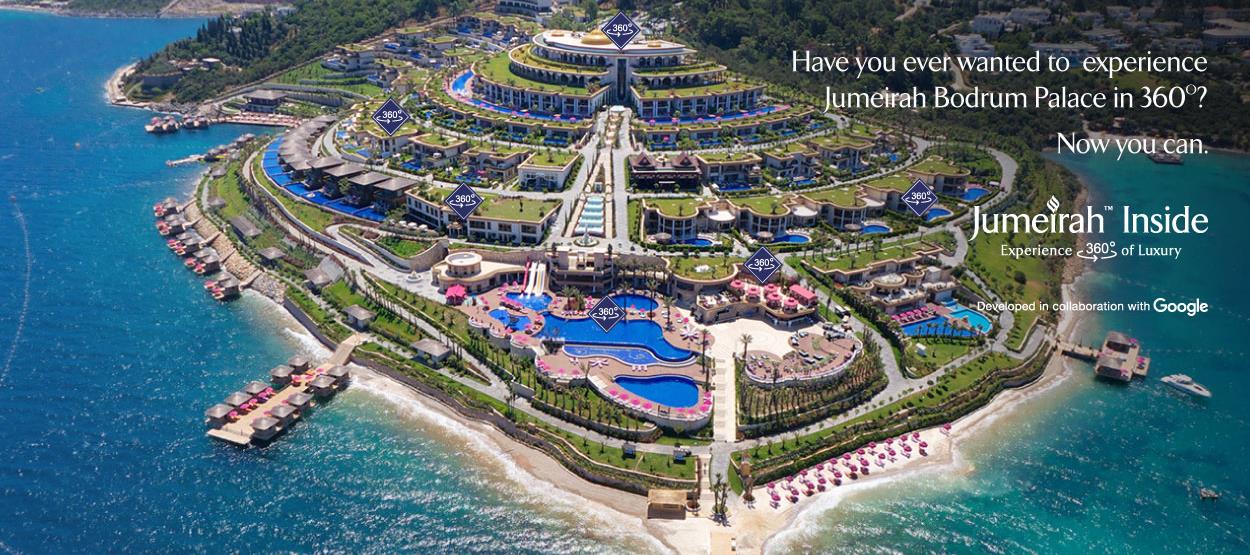
Once known as Halicarnassus, the popular resort and yachting port of Bodrum, on the Bodrum peninsula at the southern end of Turkey's Aegean coast (map), boasts the ruins of the original Mausoleum, one of the Seven Wonders of the World, as well as the lofty Castle of St Peter, a Crusader fortress which now serves as the world's foremost Museum of Underwater Archaeology. 


Bodrum is also known for its enthusiastic nightlife. If you like staying up late at loud discos and clubs, you'll love Bodrum. If you go to bed early and sleep lightly, you may suffer. As the provincial governor once said, "If you want quiet, go somewhere else." 
Two small picture-perfect bays frame the castle, making it particularly attractive to yachters.

The beaches right in town are small and the water not particularly appealing, but there are other beaches and towns nearby. In fact, many people choose to make their base in other towns around the Bodrum peninsula, coming to Bodrum itself for visits. 


To get away to a secluded hotel, or rental villa or cottage in Bodrum or one of the other towns on theBodrum peninsula for a week or a fortnight is really a dream-come-true. More...

Bodrum's beauty, mild climate and access to the sea have drawn so many Turkish and foreign visitors and part-year residents that population growth and construction are changing the character of the peninsula dramatically. Traffic is now a major concern, with roadways unable to keep up with the explosive growth in the number of vehicles. Allow plenty of time for slow going as you move about the peninsula.

Antalya 'Capital of Mediterranean Coast'

Antalya (population 2 million), "capital" of the Turkish Mediterranean Coast, is a sprawling modern city with a small, charming historic center, a good archaeology museum, long sunny beaches to east and west, the Turquoise Coast's busiest airport, good hotels, lots tosee and do, and dramatic sea and mountain views.
The historic center, called Kaleiçi (Kah-leh-ee-chee, Old Antalya) surrounds the Roman harbor. Many buildings here date from Ottoman times, a few fromRoman times, and some have been restored as houses,boutique hotels, pensions and restaurants.


Antalya's prime beach is Konyaaltı Plajı, a l-o-n-g swath of rough sand and pebbles running west for several kilometers.

The sand is somewhat softer along Lara Plajı to the east. Other beaches are farther afield at Sideand Alanya to the east, or Kemer, Phaselis andOlimpos to the south.

Visit Antalya for Kaleiçi, the museum andbeaches, and because it's the transport hub of the region with a big, modernairport 10 km (6 miles) east of the city center, and a big, modern bus terminal(Otogar) 4 km (2.5 miles) north. Here's more on how to get to Antalya, and how to get around.

Antalya is also a good base for day-trips to nearbyarcheological sites such as Aspendos, Olimpos, Perge,Phaselis, Selge, Side and Termessos (map), and evenriver rafting in Köprülü Kanyon National Park.

Capital Ankara

Ankara, Turkey's capital city, is important to diplomats, bureaucrats, lobbyists and military, and has a few significant sights for visitors.

Before the Turkish War of Independence brought Kemal Atatürk and his generals to Ankara as a wartime command post, this Central Anatolian town 454 km (282 miles) southeast of Istanbul (map) was a small town with a Roman citadel on a high hill and a brisk trade in soft Angora goat hair and the garments made from it.


After Atatürk proclaimed Ankara to be the capital of the new Turkish Republic, it began to grow. After WWII, aconstant influx of villagers from the countryside in search of a better life brought Ankara explosive growth.

Today this city at an altitude of 848 meters (2782 feet) is a sprawling metropolis of five million people, many of them employed in government ministries and embassies, in universities and schools, in hospitals and medical centers, the military, and some in light industry on the outskirts.

The city now sprawls through valleys and across hills in every direction, but on your visit you need only be concerned with a few specific areas.

Ankara's several interesting sights such as the citadel, Museum of Anatolian Civilizations, Anıtkabir(Atatürk Mausoleum) and Roman ruins, can fully occupy you for a day, but if your itinerary is rushed, spending half a day here may suffice. 

If you don't want to bother finding your way around, consider joining a half-day city tour.

Ankara can also be your base, or starting point, for visits to other points of interest in Central Anatolia.Excursions run from Ankara east to the Hittite capital of Boğazkale (Hattuşa-Yazılıkaya) and the historic town of Amasya, north to the fine historic town fluorocarbon, and south to Cappadocia (maps).

Centrally located, Ankara is a transportation nexus for all of Turkey's bus, train, plane and highway routes.More...

Ankara has plenty of good hotels and restaurants, of course, but again, you need be concerned with only a few for a one-night visit.